Aviator Guilloche Watch Dial
August 4, 2024
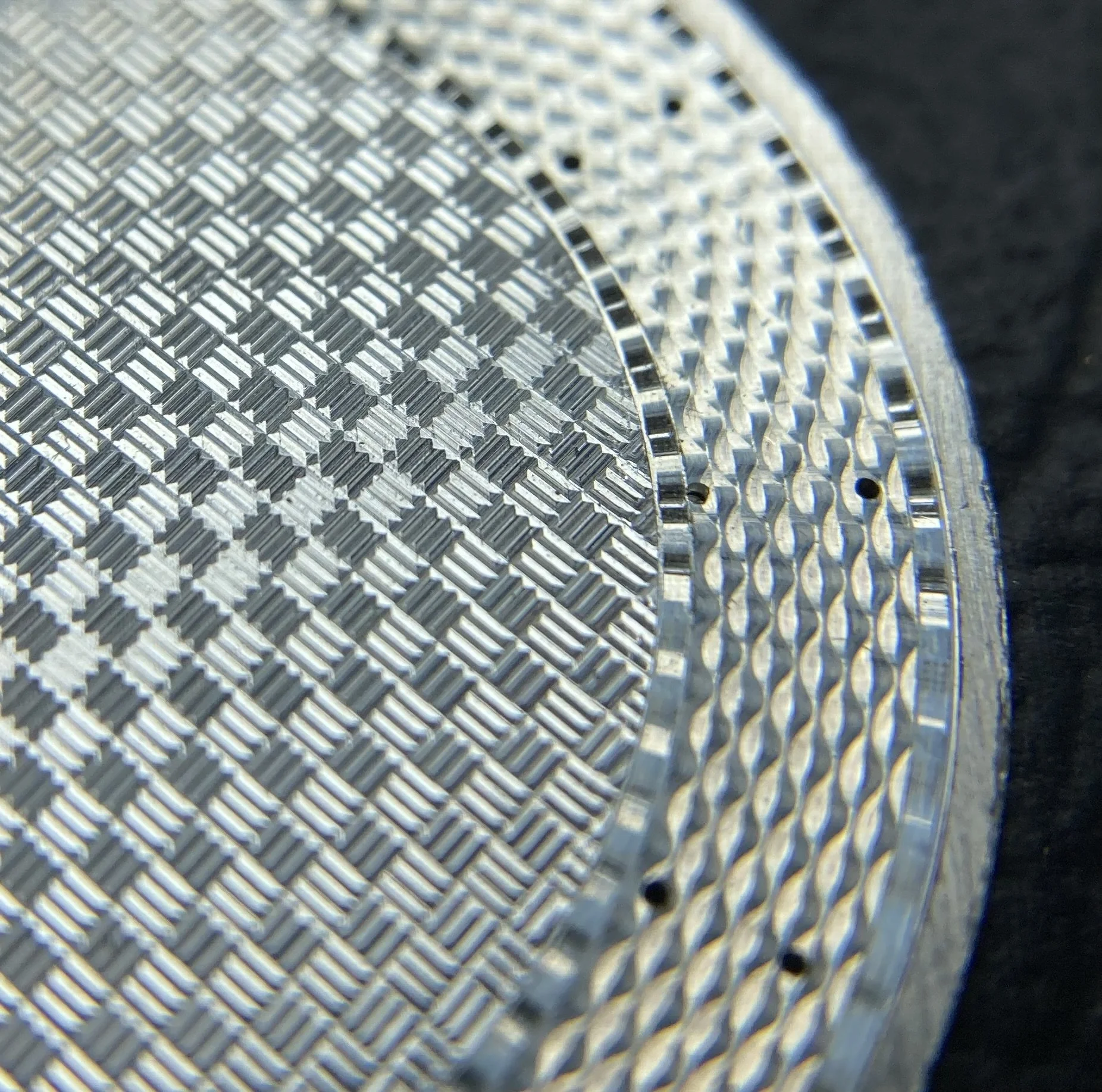
Making a monolithic dial is difficult because the entry and exit cuts of the straight-line guilloche are limited to a 0.5mm region that is later “removed” with a fluted trench (the perimeter cuts that look like ribbon). Including “badges” on a monolithic dial adds additional complexity but the result is worth it. This new dial required the following steps
CNC the lines on the 0.5mm TruSilver dial blank using a diamond drag bit.
Straight-line engine and rose engine the basket weave and barley corn guilloche (see prior posts on this page)
Cut the recesses for the dial feet on the back of the dial (to be attached in step 10)
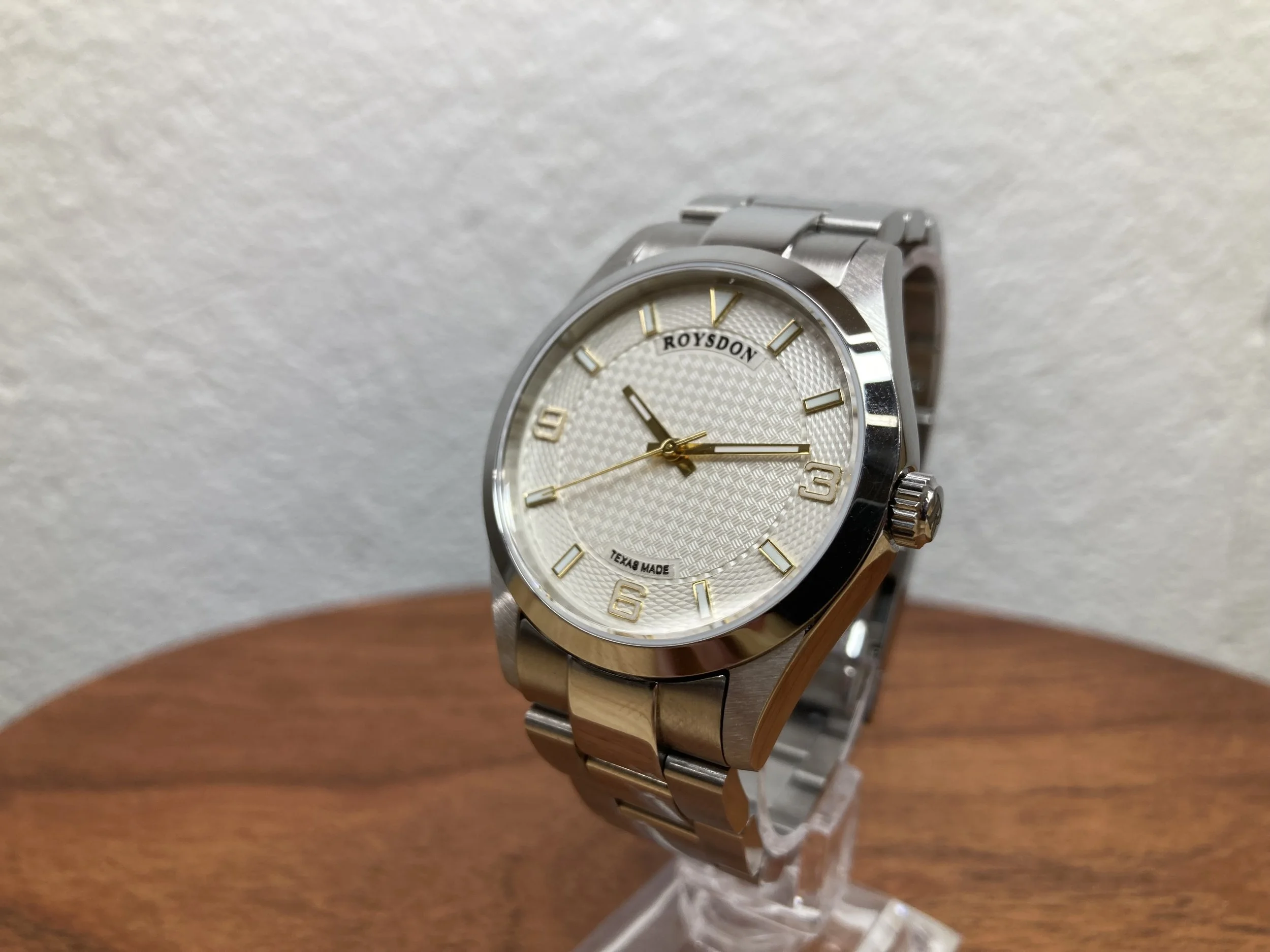
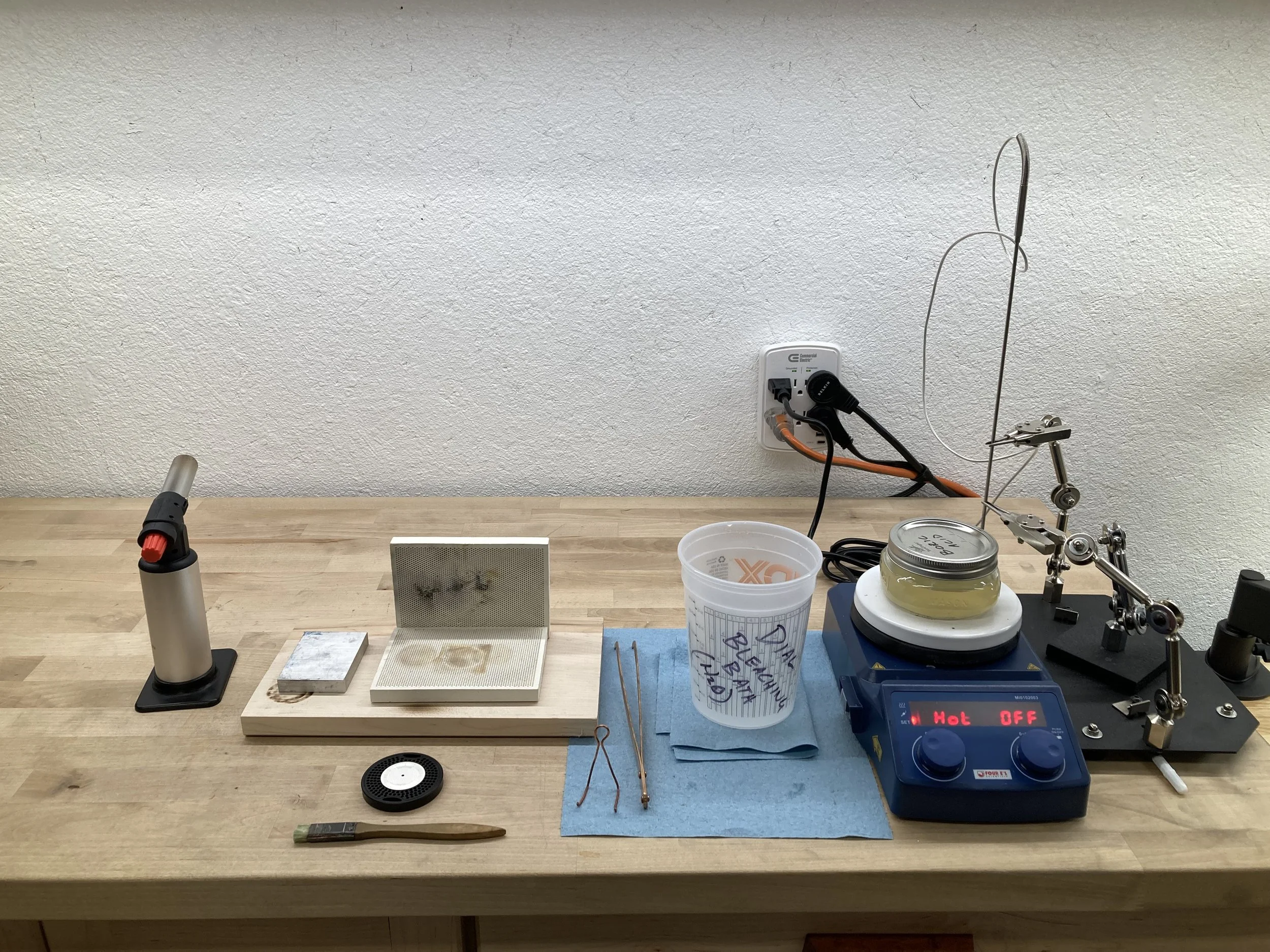
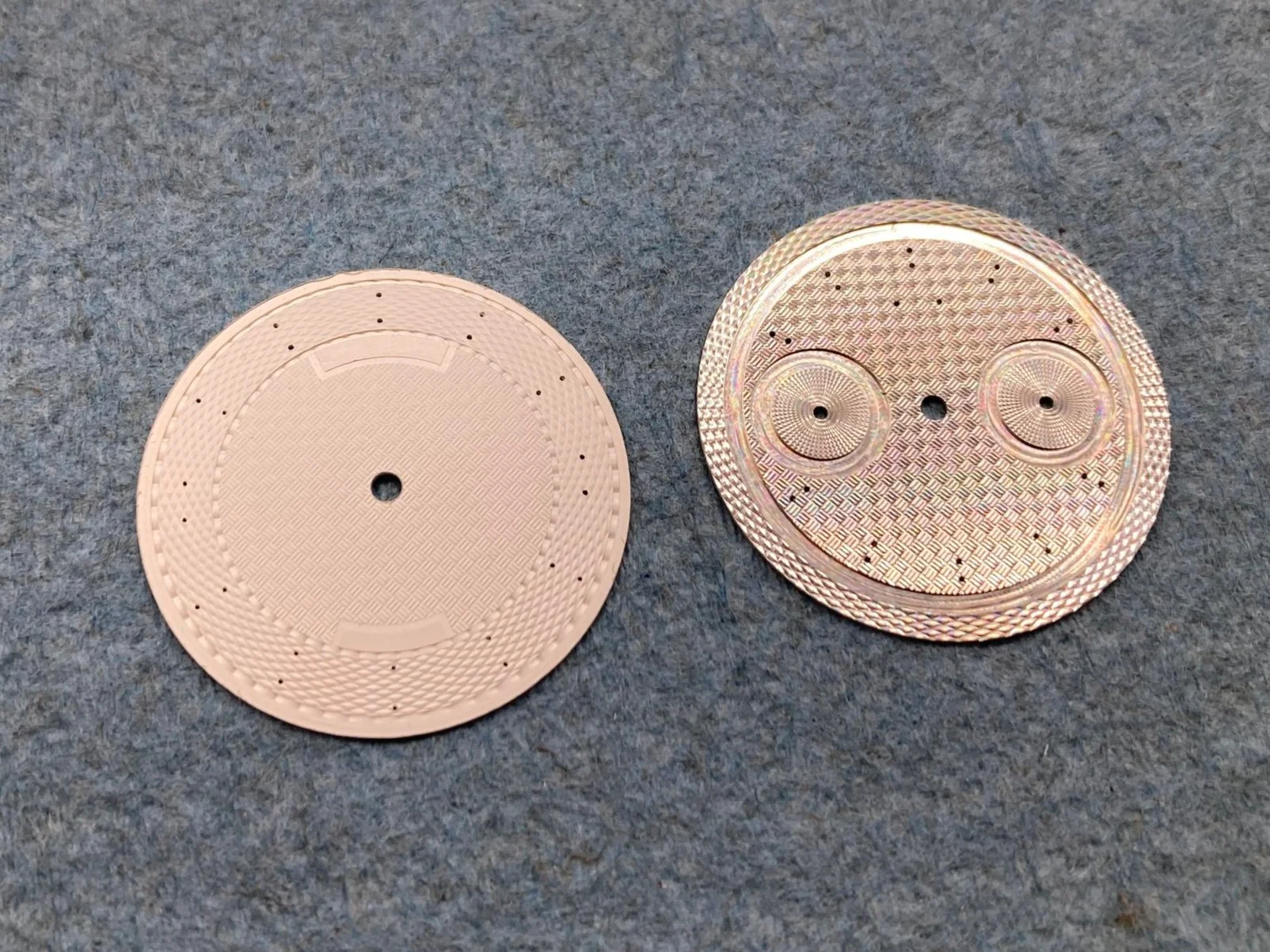
Whiten the dial using a depletion gilding process that includes heating the dial with a torch, then immersing the dial in a solution of Sparex acid (see photo) on a mixing hotplate. This process is repeated 3-10x until the dial is a matte white (see before and after photo with the Aviator and Model 2 dials).
Then the dial is lightly brushed with a soft nylon bristle brush to highlight the peaks of the guilloche.
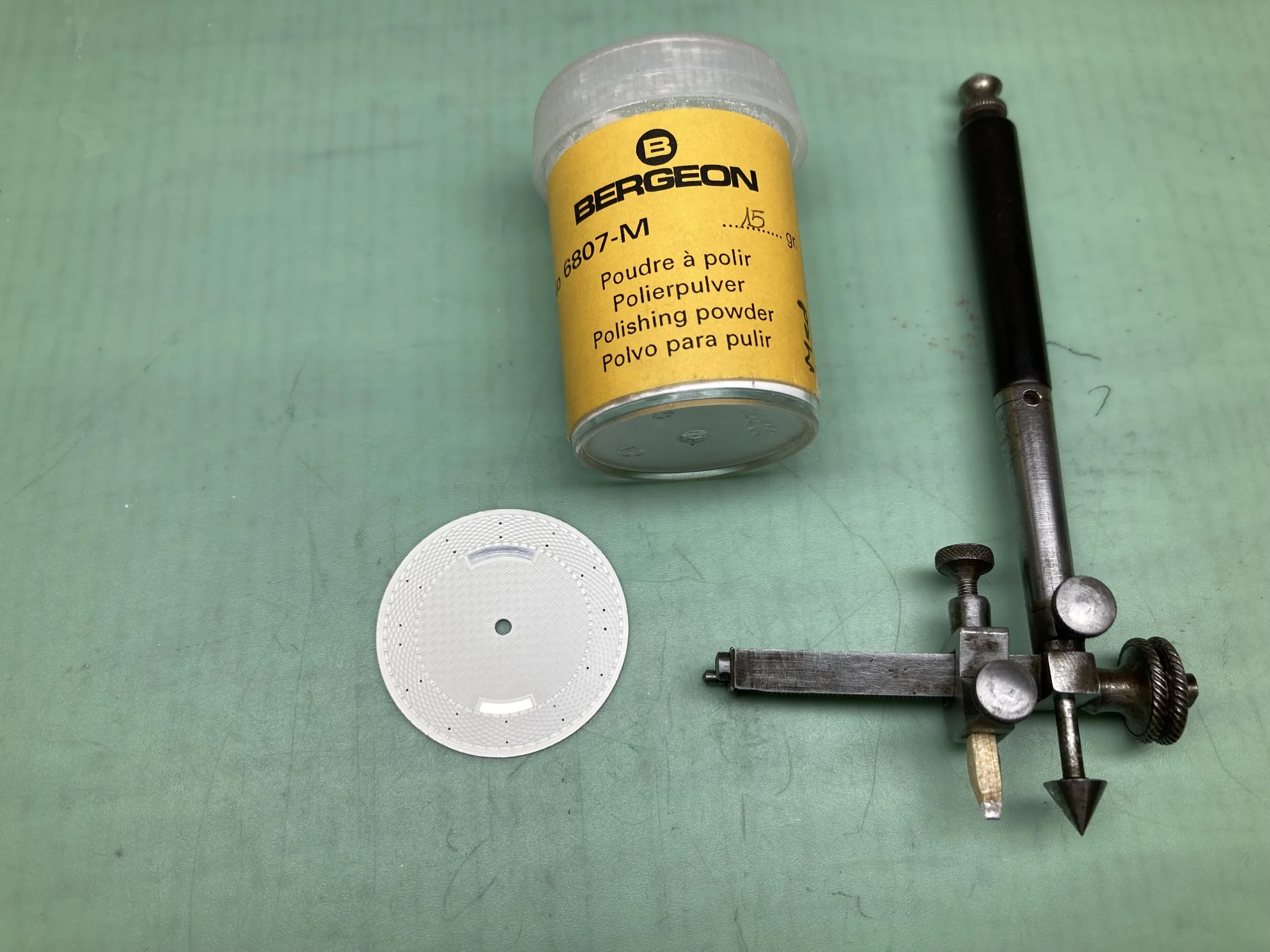
The badges are straight grained with a watchmaker compass and diamond paste (see photo).
Make the pad printer plate or cliche (see prior posts on this page)
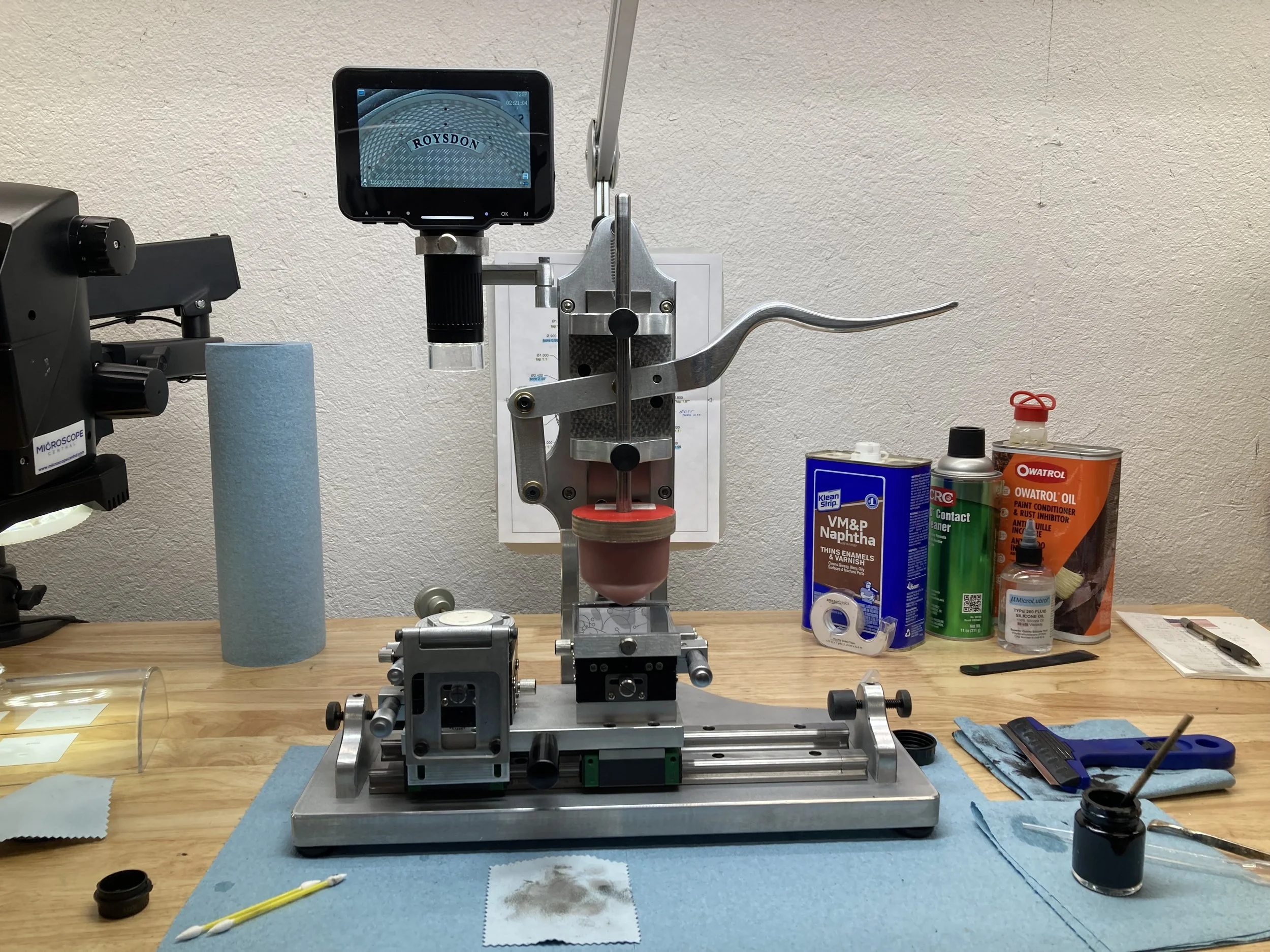
Pad print the text onto the dial (see photo) with special ink using our scratch-built high-precision pad printer (see prior posts on this page)
Apply the hour indices
Apply the dial feet
Assemble the watch
In all I am very pleased with the dial and it has the luster and appearance of a pearl. I am also very pleased with the finished watch. I think this dial is a big improvement (aesthetically) from the prior version.

Guilloche Watch Dial
June 6, 2024
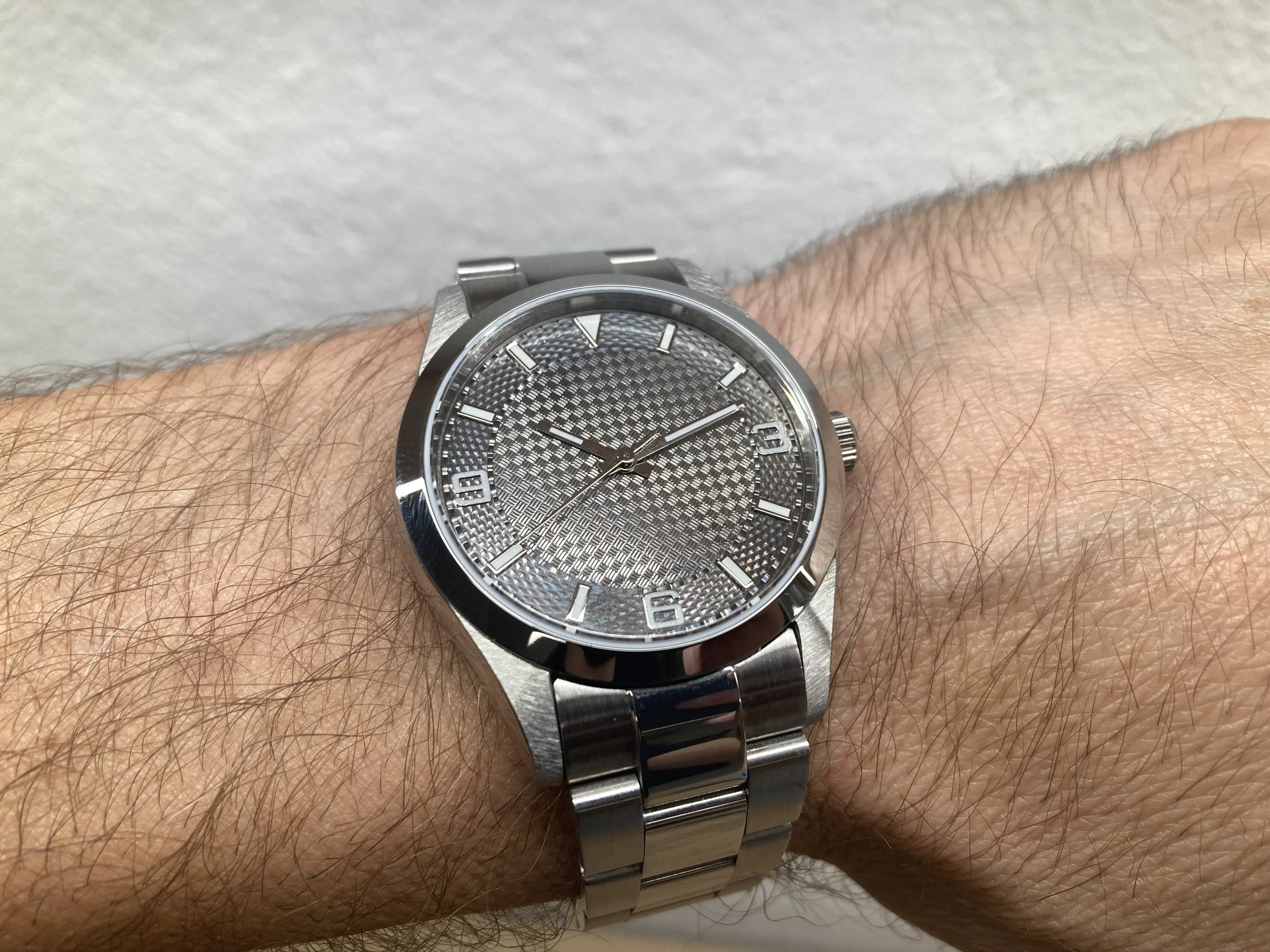
For years I have worn a Rolex Explorer as my “daily driver” watch. I planned to replace that watch with one that I built as soon as I had the right tools. Well that day is TODAY! A true guilloche dial that is black rhodium plated over a 100% silver dial made on the Elara CNC, Plant Straight-line Engine and Lindow Rose Engine.
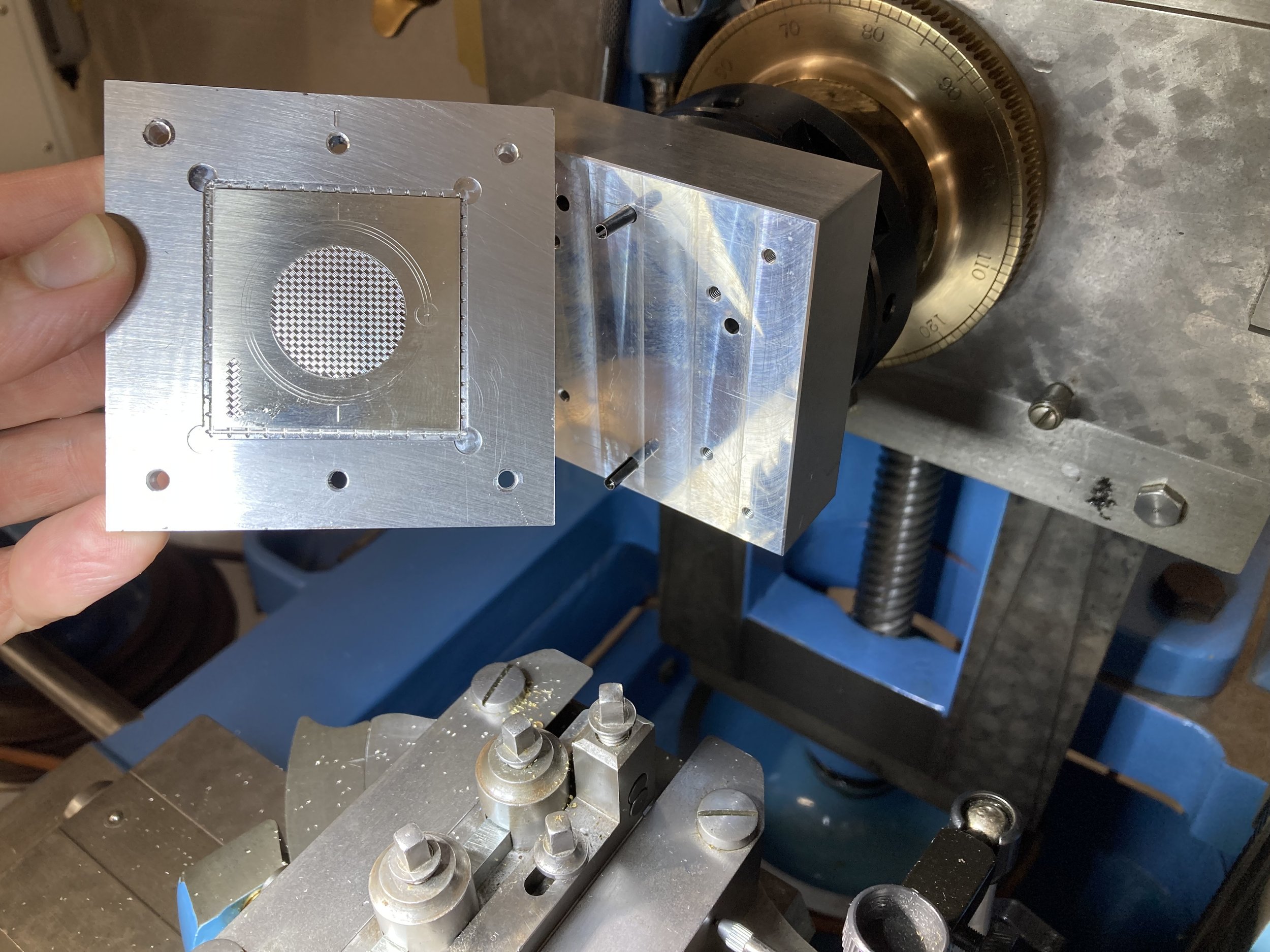
I also have a new process using a precision ground and machined “carrier” plate (see pictures) that allows me to scribe the guilloche “zones” (or layout) on the CNC, transfer the already aligned silver and carrier plate to the Straight-line Engine, then transfer the plate to the Rose Engine, all without alignment steps. This saves many hours (if not days) of work.
A huge thank you to my guilloche mentors David Lindow and Josh Shapiro!